Newton: 316.283.6655
Andover: 316.202.9990

Newton: 316.283.6655
Andover: 316.202.9990
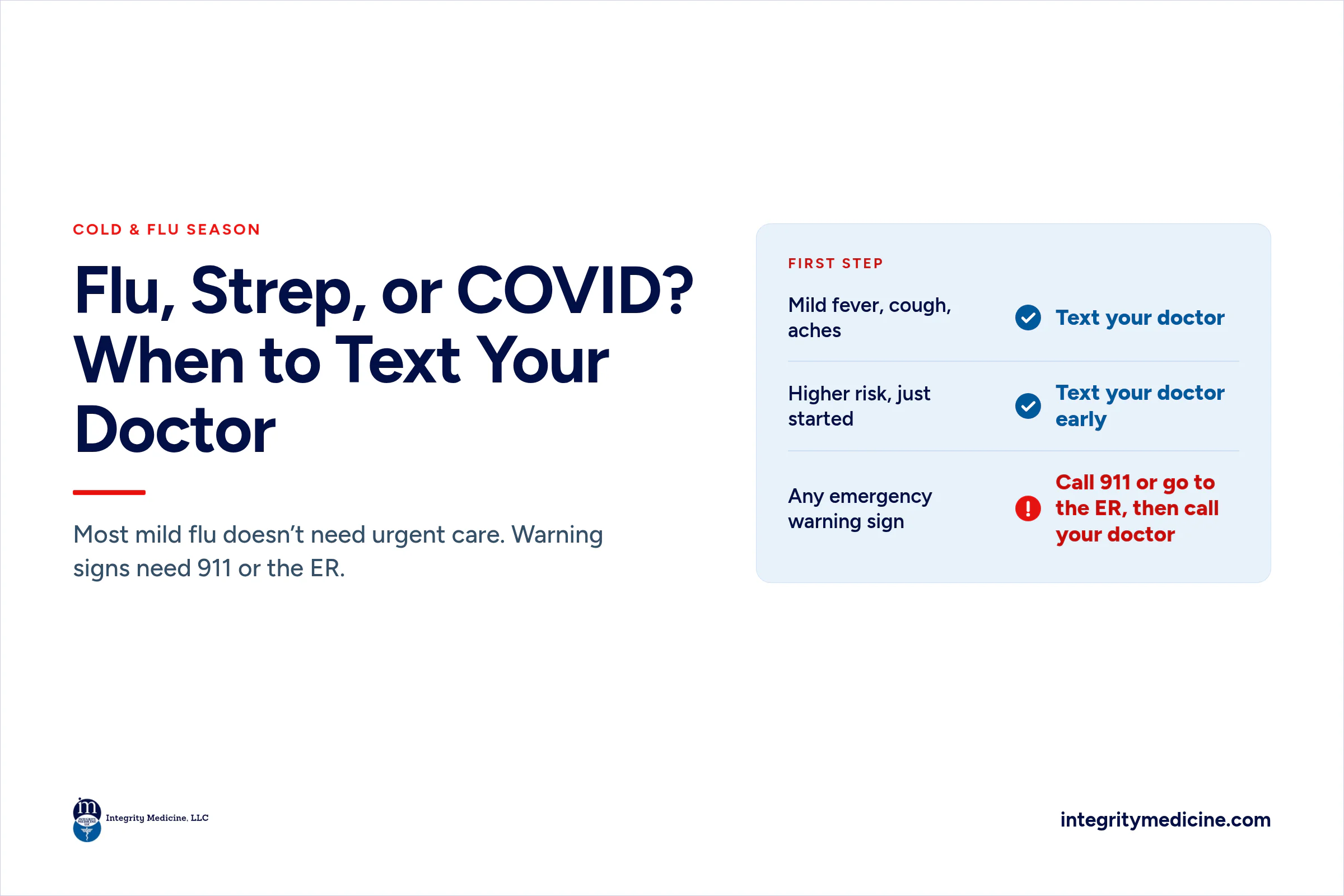
Most people with mild flu don't need to go to urgent care. The CDC says most people with flu have mild illness and don't need medical care, and the emergency room is for people who are very sick.
If you're higher risk, very sick, or worried, contact your health care provider early. For Integrity Medicine members without emergency warning signs, that first contact can be an email or text to your own doctor.
Emergency warning signs need 911 or the emergency room right away, then a call to your doctor so they can work with the emergency team if necessary.
This is general information, not a diagnosis. It can help you sort flu, strep, and COVID by symptoms, spot the warning signs that mean emergency care, and know when a text to your doctor is the right first move.
The CDC's guidance on caring for someone sick with flu breaks it down this way:
For Integrity Medicine members, "contact your doctor" can start with a text to the doctor who already knows your history. Dr. Jaimie Fager, at our Andover clinic, says urgent care type visits are the part of membership families most often don't realize they have. When she hears a member went to urgent care, her reaction is, "All you had to do was call me."

You can't tell flu and COVID apart by symptoms alone, according to the CDC. Testing is needed to confirm a diagnosis. The table shows the patterns that help you and your doctor decide what to do next, including whether strep or COVID symptoms call for urgent care or a text to your doctor first.
| Flu | Strep throat | COVID-19 | |
|---|---|---|---|
| Cause | Influenza virus | Group A Streptococcus bacteria | SARS-CoV-2 virus |
| How it starts | Usually suddenly | Sore throat that starts very quickly | May take longer to show symptoms than flu |
| Fever | Common, though not everyone has one | Common | Common |
| Cough | Common | A cough points more toward a virus than strep | Common |
| Sore throat | Can occur | Main symptom, with pain when swallowing | Can occur |
| Other signs | Body aches, headache, fatigue, runny or stuffy nose | Red, swollen tonsils, white patches, swollen neck lymph nodes, tiny red spots on the roof of the mouth | Change in or loss of taste or smell (more frequent than with flu) |
| Treatment | Flu antiviral drugs work best within 1 to 2 days, though later can still help higher-risk people | Antibiotics | Flu antivirals treat flu only, not COVID |
| Confirmed by | Test | A quick test from a health care provider | Test |
| First step without warning signs | Text your Integrity Medicine doctor | Text your Integrity Medicine doctor | Text your Integrity Medicine doctor |
Strep throat is a bacterial infection that often brings a sore throat that starts quickly, plus fever. Flu and COVID are viral illnesses that more often bring cough and body aches. A test is the reliable way to confirm which one you have.
Viruses cause most sore throats. The CDC says only about 1 in 10 adults and 3 in 10 children with a sore throat have strep throat.
Strep is most common in children 5 through 15. When one person has it, the bacteria often spread to others in the same household.
Flu and COVID share fever, cough, sore throat, aches, and fatigue. Testing can show which virus you have, and occasionally both at once, although the CDC says this is uncommon. At our Andover clinic, Dr. Fager doesn't swab every cold. When she suspects flu in a higher-risk patient and the result will change their care, she runs a combined flu and COVID swab in the clinic, and a rapid strep test can be done the same day.
People with flu and COVID at the same time can have more severe illness than people with either one alone.

Members can reach their doctor by email or text. Sharing the specific symptoms you're experiencing can help your doctor decide what to do. Dr. Fager answers most emails within 24 to 48 hours, so if you may need to be seen today, she asks members to text or call instead. If she's with patients and you need to be seen sooner, please call the office.
Good reasons to email or text (text when things are more serious, email when you're less worried):
What to include in your text:
Your doctor can then decide with you whether to come in, jump on a phone call, or keep resting at home. Dr. Fager says that in cold and flu season, about half of these sick calls are handled over the phone with over-the-counter care to try first, and a clinic visit gets set for a specific day and time in case you aren't starting to feel better in three or four more days. Ear infections and strep throat are almost always seen the same day when the timing works for your family. If you need to be seen, here's how a same-day sick visit in Andover works.

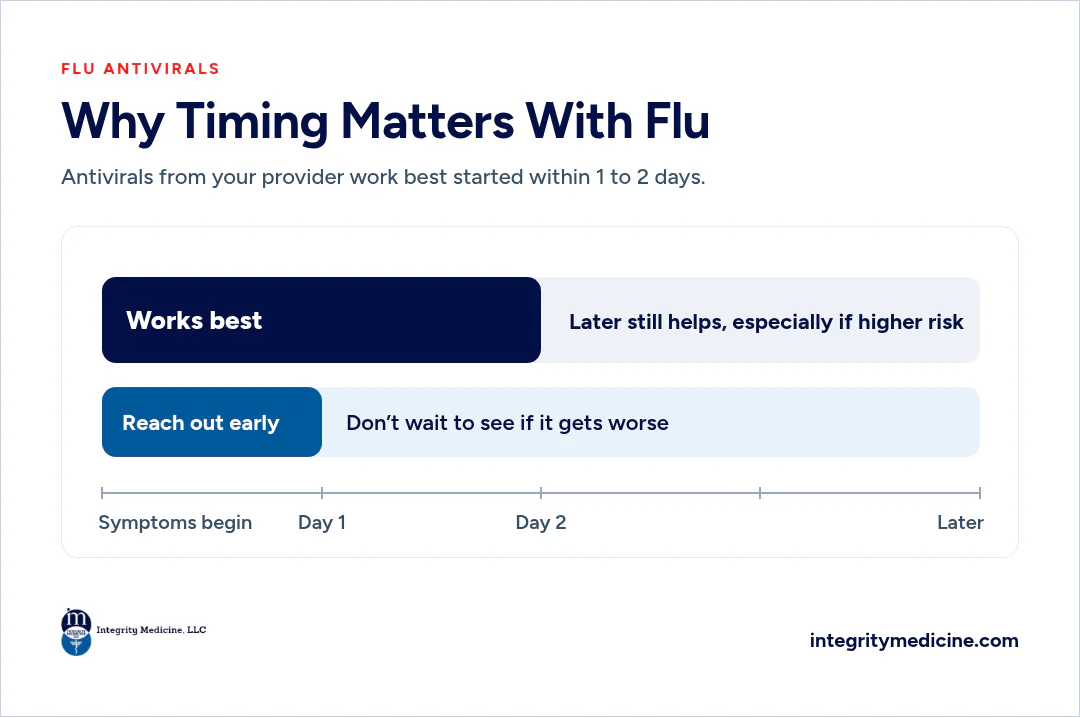
Flu antiviral drugs come from your health care provider. The CDC says they work best when started within 1 to 2 days after symptoms begin.
That window is a good reason to reach out early instead of waiting to see if it gets worse. The CDC adds that starting later can still help, especially for people at higher risk.
Contact your doctor early in your illness if you or a family member is in one of these higher-risk groups:

People with these warning signs should get medical care right away. Call 911 or go to the ER first, then get in contact with your doctor. We're happy to help coordinate your care. Dr. Fager puts it simply: chest pain or passing out means 911, and if you aren't able to make a phone call and talk, please call 911 rather than your doctor.
Emergency warning signs of flu in children:
Emergency warning signs of flu in adults:
For COVID, the CDC lists trouble breathing, persistent pain or pressure in the chest, new confusion, inability to wake or stay awake, and lips, nail beds, and skin that may appear pale, gray, or blue depending on skin tone. If someone shows any of these signs, call 911 or call ahead to your local emergency facility, then call your doctor so they can work with the emergency team if necessary.
For a broader look at choosing between your doctor and urgent care, read Direct Primary Care vs urgent care: when to use each.

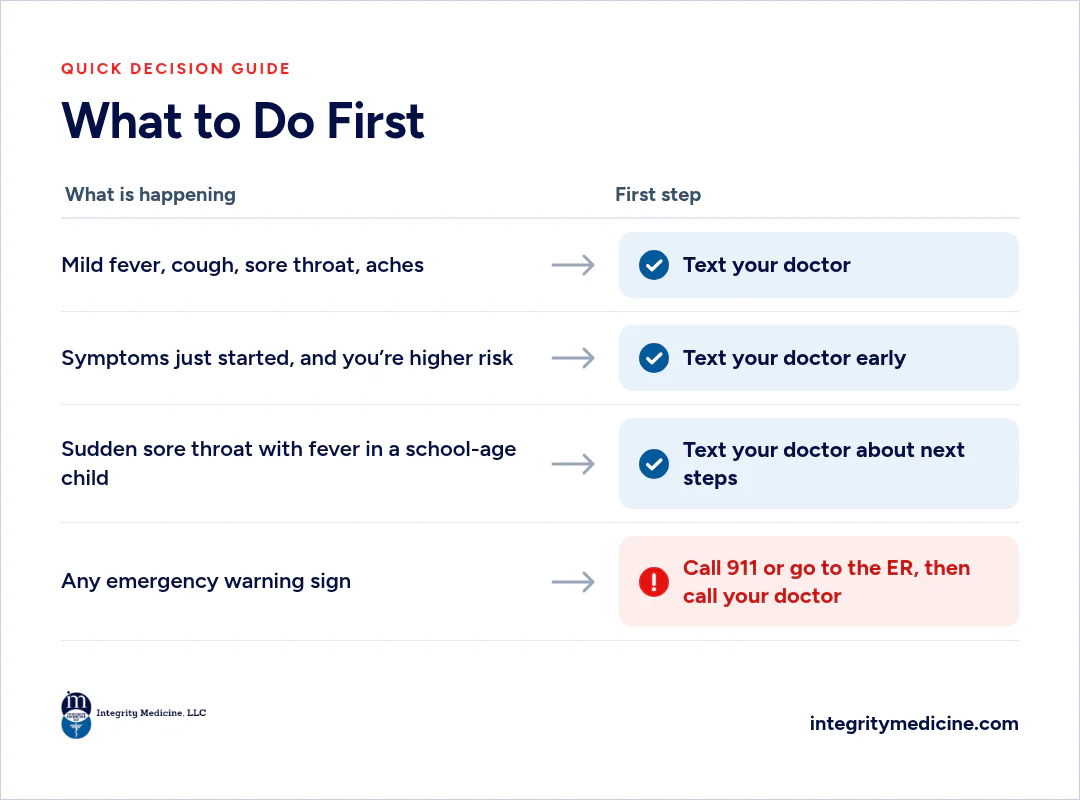
| What is happening | First step |
|---|---|
| Mild fever, cough, sore throat, aches | Text your Integrity Medicine doctor |
| Symptoms just started and you are higher risk | Text your doctor early |
| Sudden sore throat with fever in a school-age child | Text your doctor about next steps |
| Any emergency warning sign | Call 911 or go to the ER, then call your doctor |
Most people with mild flu symptoms don't need urgent care. The CDC advises contacting your health care provider if you are higher risk, very sick, or worried, and going to the emergency room for warning signs. Integrity Medicine members can typically start by texting their doctor.
A test from a health care provider is the reliable way to tell flu from strep. Strep often brings a sore throat that starts quickly, pain when swallowing, and fever, sometimes with red, swollen tonsils or white patches. Cough and runny nose point more toward a virus such as flu.
Flu and COVID symptoms overlap heavily, and the CDC says you can't tell them apart by symptoms alone. Loss of taste or smell is more frequent with COVID. Testing is the reliable way to know.
Flu antivirals work best when started within 1 to 2 days of symptoms, but the CDC says starting later can still help, especially for people at higher risk or in the hospital. That's why higher-risk people should contact their doctor early.
Integrity Medicine is a Direct Primary Care practice. New families can schedule a free meet-and-greet to see whether membership is a good fit before cold and flu season peaks.
Schedule your free meet-and-greet