Newton: 316.283.6655
Andover: 316.202.9990
.jpg)
Newton: 316.283.6655
Andover: 316.202.9990

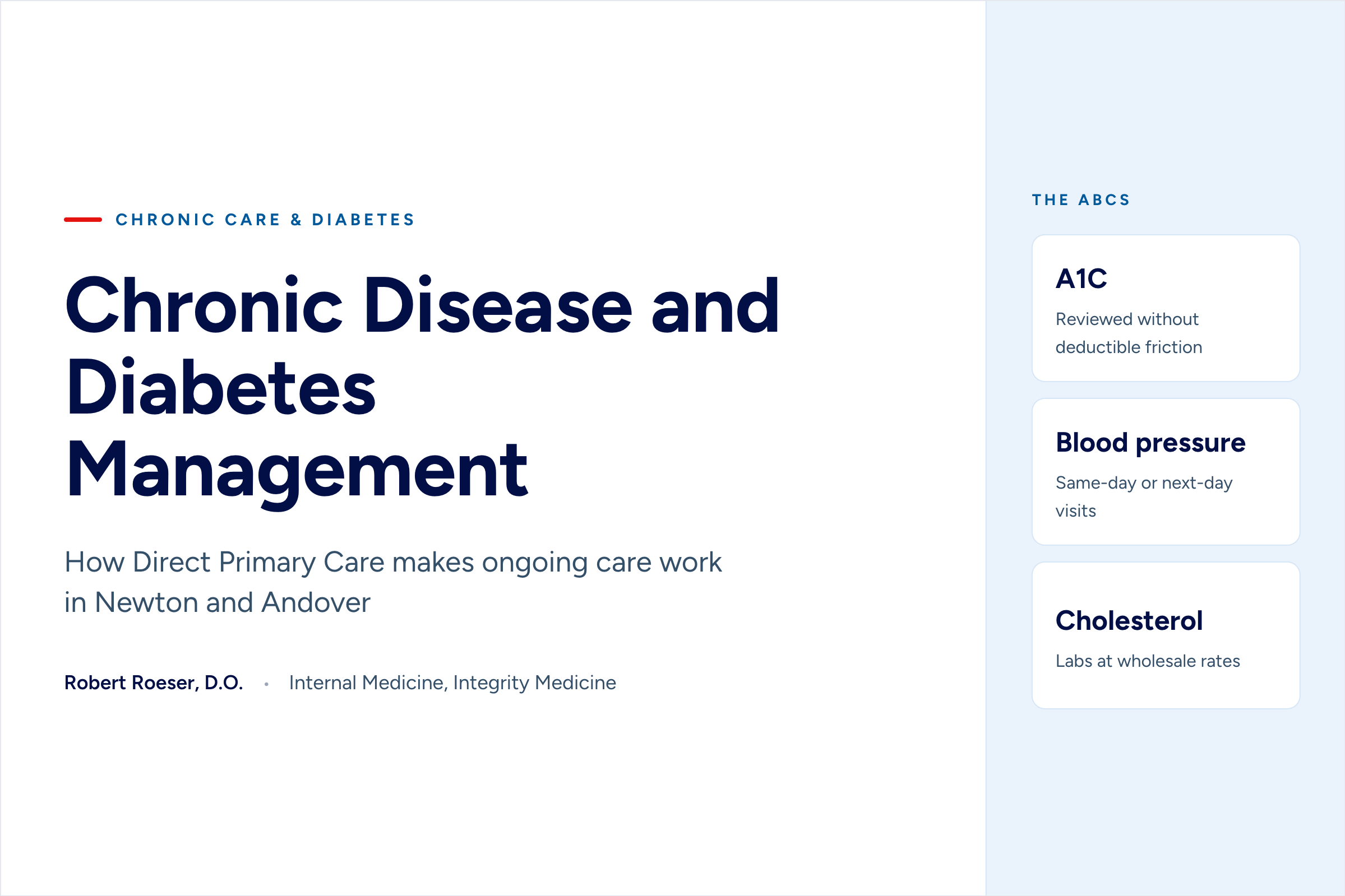
Managing diabetes, high blood pressure, thyroid disease, high cholesterol, asthma, COPD, and other lifelong conditions requires regular contact, quick adjustments, and a doctor who already knows your history. Traditional primary care often cannot deliver that. Short visits, weeks-long waits, and a bill for every lab or follow-up create friction that lets conditions drift.
Direct Primary Care improves chronic disease and diabetes management by removing that friction. Unlimited visits, same-day or next-day access, direct text or email to your physician, and transparent pricing for the labs and medications you need most often change the day-to-day reality of ongoing care.
Lifelong conditions respond to steady monitoring, timely medication changes, and lifestyle support that fits real life. Research and clinical experience both show that strong primary care continuity improves control and reduces complications.
The practical requirements are simple but hard to meet in a high-volume insurance model:
When those pieces are missing, patients delay care, skip labs, or wait too long for adjustments. The condition drifts.
Patients put off a needed adjustment because every visit costs money or takes half a day. Over time the numbers climb and the risk compounds. That is why we built our chronic disease management model the way we did.
.webp)
Most traditional practices run on short visits and high patient volume. A 10- or 15-minute slot leaves little room for reviewing glucose logs, discussing side effects, or adjusting a plan in real time. Scheduling a follow-up often means weeks of waiting. Every visit and every lab carries a copay or deductible charge.
For someone managing type 2 diabetes, that structure creates repeated friction. Medication changes that should happen over weeks stretch into months. An infection or a high reading that needs same-day attention becomes an urgent care or emergency room trip.
Cumulative costs for quarterly A1C tests, lipids, and maintenance medications add up even for insured patients. The result is reactive care instead of proactive management. Patients end up managing the system more than the condition itself. For a closer look at how the models differ when acute issues arise, see our comparison of Direct Primary Care versus urgent care.
.webp)
At Integrity Medicine we built the practice around the access and continuity that ongoing conditions need. Membership includes unlimited office visits with no per-visit fee. You reach your physician by text, email, or phone for non-urgent questions and for more urgent concerns.
Appointments are same-day or next-day in most cases. The same doctor sees you every time and also cares for patients in the hospital at Newton Medical Center. I make nearly all of my own appointments. When a patient emails about a blood pressure change or a diabetes question, I often answer it right there. That kind of continuity keeps conditions stable. This is the foundation of our chronic disease management approach.
Members managing type 2 diabetes can come in as often as needed, sometimes twice a month during medication adjustments, without an extra charge. Between visits they email glucose readings or questions and get answers without forcing an office trip. Labs and common medications are available at wholesale or near-wholesale prices, so the cost of monitoring does not become the barrier.
Over 85 percent of our members carry insurance or a medical sharing plan. They keep it for hospitalizations, surgery, and specialists. They use the membership for the day-to-day work that actually keeps chronic conditions stable. See why most members keep insurance.
See full membership details and pricing
Effective management still rests on the same foundations taught by major guidelines: the diabetes ABCs, lifestyle measures, medication adherence, and regular screening for complications. The difference is whether the care system makes those steps easy or hard. The CDC emphasizes managing the ABCs — A1C, blood pressure, and cholesterol — to help prevent complications.
Regular A1C testing shows the average blood sugar over the prior three months. Blood pressure and cholesterol targets reduce the risk of heart attack, stroke, and kidney disease. In a Direct Primary Care practice those tests can be ordered and reviewed without deductible friction. Results often return the next day by email rather than requiring a second visit and another bill.
I look at the full picture rather than a single number. When we need faster feedback after a medication change, we adjust the monitoring plan so we can respond sooner instead of waiting months.
.webp)
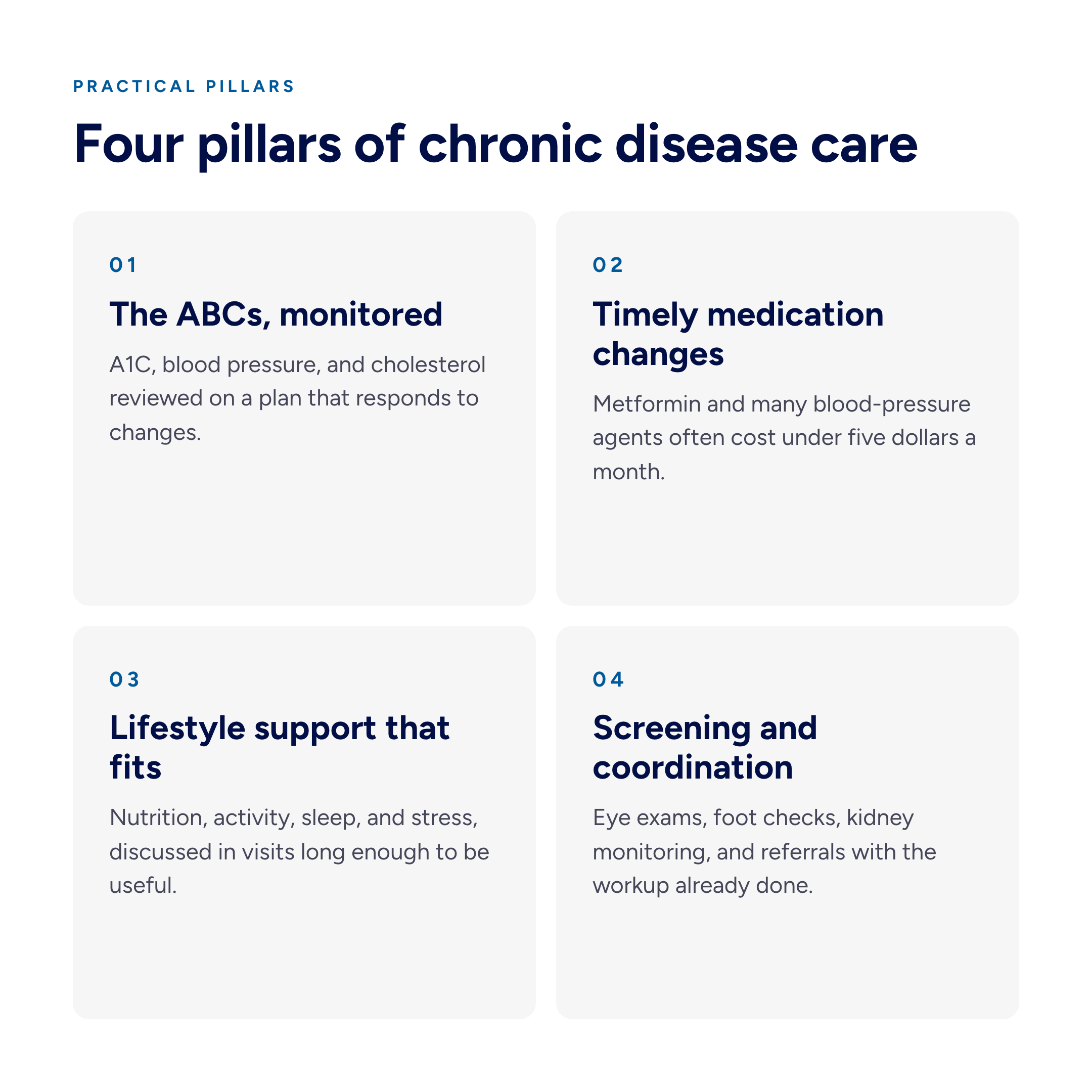
Common medications for diabetes, blood pressure, and cholesterol are available at wholesale prices. Metformin and many blood-pressure agents often cost under five dollars a month. When a change is needed, the physician who already knows the patient can adjust without a three-week wait for the next available slot.
In my years practicing internal medicine, I have learned to treat the person living with diabetes, not just the numbers. That means understanding the mechanism and coaching through the daily realities, not simply checking boxes on a chart.
Nutrition, activity, sleep, and stress management matter. Longer appointments give time to discuss what is actually sustainable. Direct access lets patients ask questions about meals, exercise, or sick days as they arise.
The goal is a plan that holds up in real life, not a plan that's "perfect" but falls apart the first busy week.
Primary care remains the hub. We coordinate referrals to endocrinology, cardiology, ophthalmology, or other specialists when needed and keep overall responsibility. Eye exams, foot checks, and kidney monitoring stay on the schedule because the relationship is continuous.
When I send a patient to a specialist, I finish the basic workup first. The specialist receives a complete picture instead of starting from scratch.
Many patients live with more than one ongoing diagnosis. Diabetes often travels with high blood pressure, high cholesterol, thyroid disease, or weight-related concerns. One physician who sees the full picture and adjusts multiple medications in the same visit reduces fragmentation and conflicting advice.
Our physicians include internal medicine doctors experienced with complex adult medicine and family medicine physicians with special interest in obesity medicine and chronic disease management. The same doctor who manages the outpatient plan also provides hospital continuity at Newton Medical Center when a patient is admitted.
For patients who also need structured weight support, medical weight loss services are available under the same membership model.
Membership pricing is age-based and published:
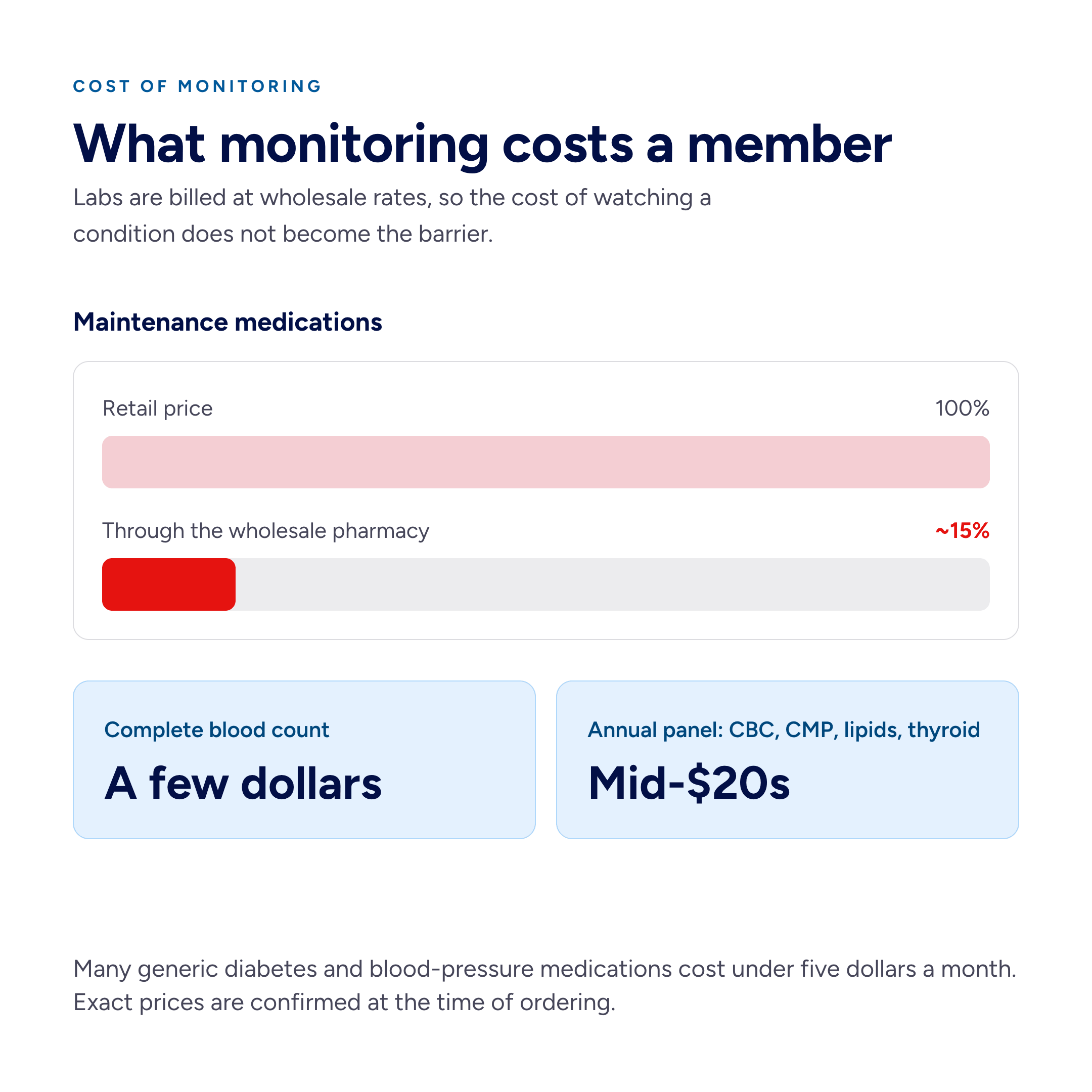
Labs are billed at wholesale rates. A complete blood count often runs a few dollars. An annual metabolic panel that includes CBC, CMP, lipids, and thyroid testing sits in the mid-twenties. Routine chronic monitoring saves hundreds of dollars a year compared with insurance list prices. Common maintenance medications for diabetes and blood pressure are available at approximately 15 percent of retail.
Membership is eligible for HSA reimbursement. As of January 1, 2026, HSA funds can be used for Direct Primary Care memberships within the published monthly caps.
You meet your physician for a free meet-and-greet before deciding. Once enrolled, the same doctor books most of their own appointments. Wait times are measured in minutes, not weeks. Direct communication channels stay open for questions that come up between visits. Care plans are adjusted as labs and symptoms change rather than on a fixed quarterly calendar.
Both our Newton Direct Primary Care and Andover Family Medicine locations provide this model of ongoing care. You can learn more about chronic disease management on our service page or read what a Direct Primary Care membership covers.
If an acute issue arises that affects control of a chronic condition, same-day sick visits are available so problems do not wait.
Most type 2 diabetes is managed successfully in primary care. Our physicians handle medication management, monitoring, lifestyle support, and complication screening. We coordinate with endocrinology when a case is complex or when insulin pumps, advanced technology, or specialized therapies are required. The primary care physician remains the central coordinator.
Frequency depends on control and recent changes. Some patients need only quarterly visits once stable. During medication adjustments or periods of poor control, more frequent visits (sometimes twice monthly) become useful. Unlimited visits remove the financial reason to delay those check-ins.
No. Direct Primary Care covers the primary care layer: visits, basic procedures, coordination, and discounted labs and medications. Hospitalization, surgery, advanced imaging, and most specialist care still require insurance or a medical sharing plan. Over 85 percent of our members keep coverage for the larger risks while using membership for the ongoing work of chronic disease management.
Labs are billed at wholesale rates. Routine monitoring panels commonly fall in the $20–30 range rather than several hundred dollars. Many generic diabetes and blood-pressure medications cost under five dollars a month through the wholesale pharmacy. Exact prices are confirmed at the time of ordering.
Yes. Schedule a free meet-and-greet to meet the physician, review your conditions, and decide whether the model fits. Both Newton and Andover locations are accepting new patients for ongoing care. You can meet Dr. Robert Roeser, Dr. Leah Inman, Dr. Anna Cleland-Leighton, or other members of the team.
Managing a chronic condition is easier when the system is designed for it. Come meet us. The conversation is free and carries no obligation.
Schedule a Free Meet & Greet
Call 316.202.9990 (Andover) or 316.283.6655 (Newton)